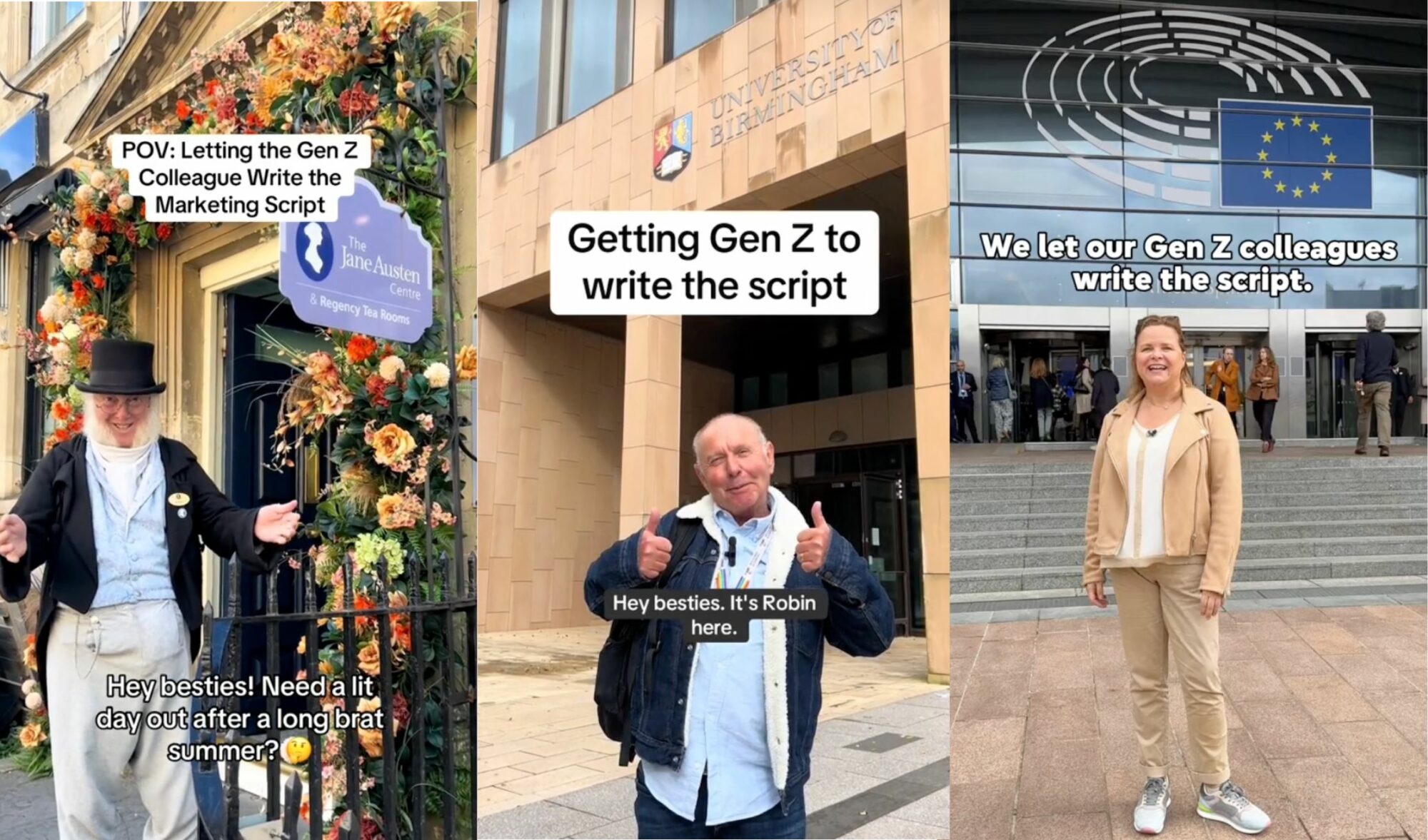
People don’t want to talk to logos anymore
Social media has fundamentally changed the relationship between brands and consumers. When marketing primarily lived in newspapers, billboards and television adverts, brands could afford to sound polished. Communication was largely one-way: brands spoke, and audiences listened.
Brands now exist in the same feeds as our friends and they are no longer competing only with other companies for attention. A carefully crafted corporate statement doesn’t necessarily stand out when the post beside it is someone’s chaotic holiday video that has somehow attracted three million views. So brands adapted and have become more casual and more reactive and more human.
The brand with a personality
Companies have always used humour, wit and distinctive language to make themselves more memorable. What has changed is the level of informality. Brands aren’t simply trying to communicate clearly anymore, they’re trying to communicate in a way that feels native to the internet. “Thank you for your feedback” becomes “Okay, you got us.” “Introducing our new product” becomes “She’s finally here.”
When consumers are scrolling through content created by people they know, creators they follow and communities they genuinely engage with, traditional corporate language can feel increasingly out of place. Brands want to feel like part of that conversation rather than an interruption to it.
Duolingo is the strongest example of a brand that has successfully developed an internet native personality. Their social channels don’t use slang for the sake of sounding young. Duo the Owl is essentially treated as a character, with an ongoing personality and storylines, their TikTok strategy has included everything from trending sounds to the “death” and revival of Duo, which became part of a wider piece of brand lore. TikTok’s own 2025 case study reported 34.8 million campaign impressions and a 12.63% engagement rate for its “Cult Mass” campaign.
The problem with trying too hard
The issue is that when every brand tries to sound young and relatable, they all start to sound the same. Suddenly every time I scroll there is another brand video with “POV…”, “It’s giving…” or “We’re obsessed…” thrown into it. Brands that once had their own tone of voice are beginning to borrow the same language from social media, and that’s when being “relatable” can start to feel a little forced.
People can usually tell when a brand is actually speaking naturally and when it’s been told to “sound more human”. There’s a difference between a brand having a personality and simply putting one on for social media.
The authenticity paradox
The harder brands try to appear authentic, the easier it becomes to question whether that authenticity is actually real. A slightly messy behind-the-scenes video can feel genuine. But when every brand starts deliberately producing slightly messy behind-the-scenes videos, imperfection becomes just another content strategy.
The same thing has happened with humour. Brands discovered that being funny gets attention. Naturally, everyone wants to be funny. But not every brand needs to be the funny friend. Your accountant doesn’t necessarily need the same personality as a fast-food chain. The best brand voice isn’t necessarily the funniest or loudest, It’s the one that makes sense for the brand.
The brands getting it right understand the difference
The strongest social brands aren’t necessarily the ones using the most slang. They’re the ones that know who they are. They can be playful without desperately trying to sound young.
Most importantly, they understand that being human doesn’t mean abandoning the brand. It means giving people something recognisable to connect with. A strong brand voice should feel like a natural extension of the brand, not a costume it puts on for social media.
Should every brand talk like your 24-year-old friend?
Probably not. The lesson isn’t that every brand needs to become more casual. It’s that brands need to become more human. And there’s a difference. Human brands have opinions. They have quirks. They have a sense of humour. They know when to speak and when to stay quiet.
They don’t force a personality that isn’t theirs simply because a particular tone is trending. Because the internet doesn’t need another brand saying, “We’re screaming.” It needs brands that actually have something interesting to say.
The future of brand voice isn’t necessarily about sounding younger or more relatable. It’s about sounding like yourself.
Amelia Bywater on October 7th, 2026