Have we passed peak social media?

Social media is entering a new phase. Growth has plateaued, attention is fragmenting, and audiences are engaging less. We’ve been digging into the Financial Times’ idea that we may have reached peak social media, and what that means for brands trying to stay relevant in a changing digital landscape.

Have we passed peak social media?

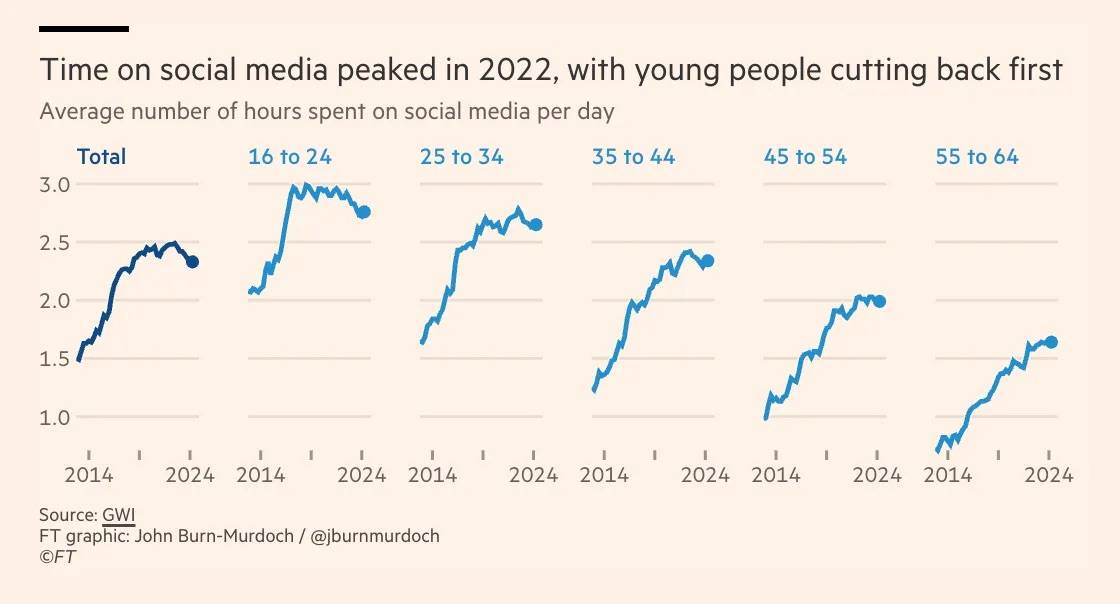
The Financial Times has suggested that we may have already passed peak social media. Drawing on data from GWI’s global survey of 250,000 adults across 50 countries, the report found that average daily time spent on social platforms peaked in 2022 and has since fallen by almost 10%, now sitting at around 2 hours 20 minutes per day. The decline is most pronounced among Gen Z and users in their 20s, the audiences once seen as social media’s growth engine. Meanwhile, North America bucks the trend, where usage remains about 15% higher than in Europe, suggesting the slowdown isn’t universal and possibly more reflective of broader cultural shifts in how people use the internet.


Beyond the pandemic bump

The FT stops short of declaring social media’s death, but it does describe a clear plateau. While part of this can be attributed to a post-pandemic fall-off (users spending less time online as offline life resumed) the data points to a deeper trend. Since 2014, the share of people using platforms to stay in touch with friends, express themselves, or meet new people has dropped by over 25%, replaced by more passive, habitual scrolling. The report notes that the curve shows a gradual rise and fall over a decade, not a sharp correction, suggesting social media has matured and may now be past its natural growth peak.


GWI


The age of passive participation

The age of effortless engagement it would appear is now over. Social media isn’t dying, but is clearly changing shape as its place within global life continues to evolve. People are happier to lurk, watch, and consume quietly, rather than like, share, or comment. Engagements have arguably never been harder to earn on social media and the days of audiences smashing that like button as default are no longer. The rise of Substack, newsletters, long-form podcasts, and continued prominence of YouTube hints that audiences aren’t rejecting content outright, but instead they’re rejecting noise. They’re becoming more intentional about who they follow and why, valuing depth, expertise, and authenticity over virality.


What does this mean for marketers?

For brands, this is both a challenge and an opportunity. Attention may be contracting, but the appetite for substance is clearly not abaiting. The winners of the post-peak era will be those who build work people actually want to spend time with. This will inevitably mean prioritising and creating content that rewards curiosity, sustains interest, and earns loyalty in a landscape that no longer gives it away for free.


Beatriz Barot on November 11th, 2025