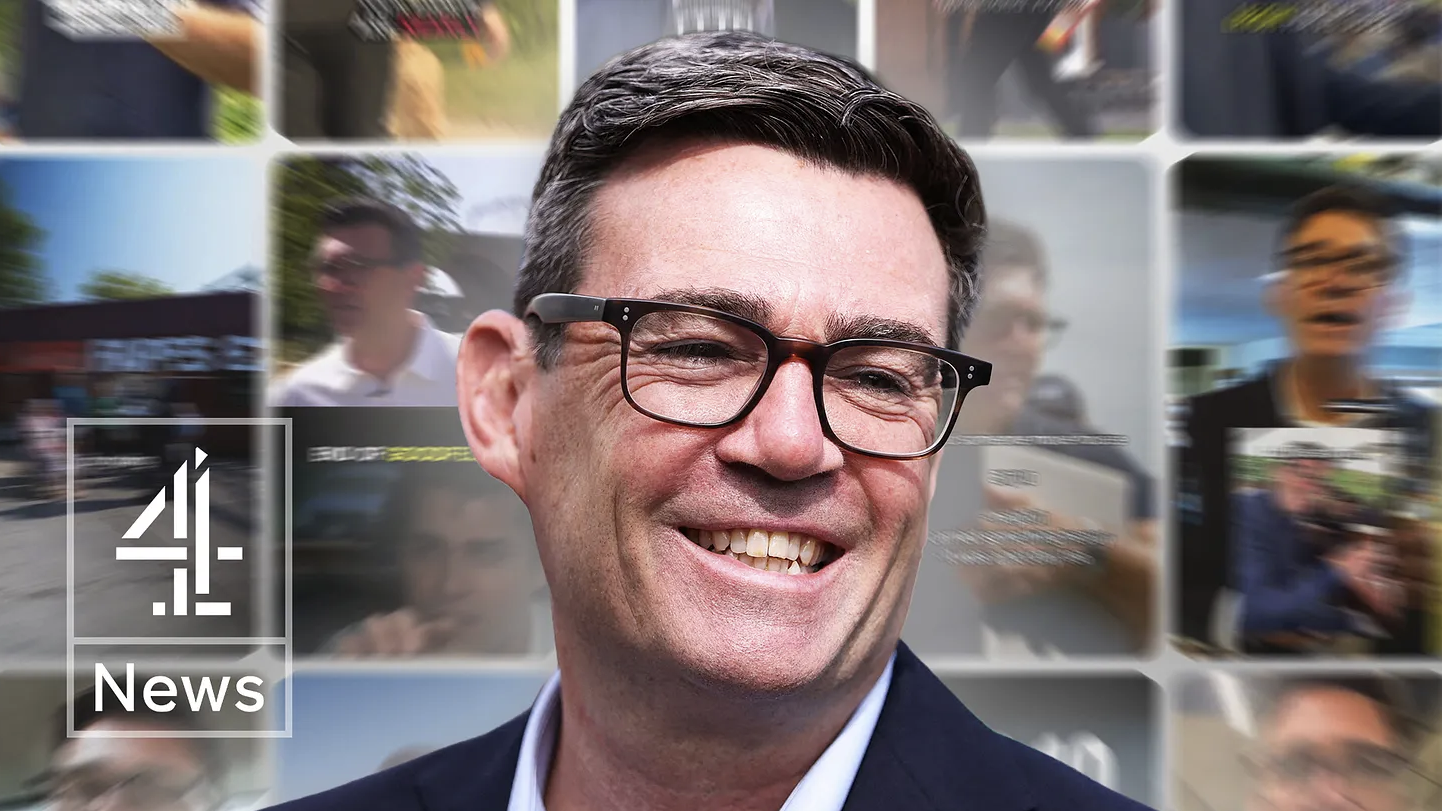
Burnham goes all in on TikTok
Burnham’s TikTok strategy has been noticeably different from the buttoned-up approach associated with his predecessor, Keir Starmer. His videos are designed for consumption across TikTok, Instagram and Facebook. He talks about policy while pouring a pint, sits behind the wheel of a bus and appears alongside influencers and celebrities.
Andrew Chadwick, professor of political communication at Loughborough University, described the approach as going “all in on the TikTok style”, with simple policy pledges that are easy for audiences to understand and share.
The strategy was already visible before Burnham entered No 10, when his team released a video inviting people in Cardiff to “ask Andy anything”, covering everything from homelessness and social care to pubs and hospitality. The audience response was immediate. When Burnham became prime minister, searches for his name on TikTok surged by more than 2,000% in the UK.
The audience is being given a reason to watch
The most interesting part of Burnham’s strategy is that the content is being created specifically for the platforms where people are watching.
On his first day in office, Burnham posted a handheld video outside The Passage, a London homelessness charity, promising to end rough sleeping “at the first opportunity”.
Later, a “day one” montage showed him visiting the charity, meeting his cabinet and speaking outside No 10. The video attracted more than 820,000 views. Rather than asking audiences to seek out the news, the news is packaged in the format audiences are already consuming.
Borrowing other people’s audiences
Burnham's team has also understood another fundamental rule of social media: you don't always need to build the audience yourself.
The prime minister joined Sir Mo Farah for a jog through London as part of Farah's Run With Mo series, with the content subsequently reaching Farah's 1.9 million Instagram followers. He also appeared in Max Klymenko's viral “Career Ladder” series, giving Burnham access to an audience far beyond traditional political followers.
These collaborations do more than generate views. They introduce Burnham to people who may have little interest in politics but plenty of interest in the personalities and formats they already follow.
“Next stop, £2 fares”
Burnham's most successful post of the week showed what happens when the strategy gets the balance right. “Next stop, £2 fares,” he tells the camera from the driver's seat of a bus.
The video also features Bemi Orojuogun, better known as “Bus Aunty”, who went viral for her enthusiastic videos about London's buses. The result was Burnham's video generating more than 2 million views and 240,000 likes.
The important point is that the video was a piece of content. There was a recognisable personality, a familiar setting and a creator with an existing audience and a simple message that could be understood almost instantly. The policy became part of the entertainment rather than something audiences had to stop and consume separately.
The numbers suggest something is working
According to consultancy Knox Digital, Burnham's TikTok following increased by approximately 73% during his first week as prime minister, rising from just under 99,000 followers to more than 170,000.
His engagement rate was also marginally higher than Starmer's first week on TikTok: 6.29% compared with 6.23%.
But perhaps the more important metric is attention. Burnham has made people curious about what the prime minister is going to post next, that's a valuable position for any political communicator.
The advantage of being native to the platform
Burnham's first week points towards a broader change in political communication. For decades, politicians were trained to communicate through speeches, newspaper interviews, television appearances and press conferences. Now they also need to understand the mechanics of the feed.
That means knowing how to make the first few seconds work, how to collaborate with creators, how to turn policy into a visual story and, perhaps most importantly, how to avoid looking like you're trying too hard. Burnham appears to have understood that distinction surprisingly quickly and he's adapting the communication itself to the platform.
Burnham has achieved something politically valuable: he has made the prime minister's feed feel like somewhere people might actually want to go. And in an attention economy, that may be the first step towards building a much bigger political brand.
Anais Lewis, Amelia Bywater on August 24th, 2026